When you sign up with Dootyful Scoopers, you already knew about the text alerts, the gate photo, and the fact that we show up rain or shine. What most customers don't fully realize until after their first visit is what we're actually sending them in that text, and what it means.
It's called the Dooty Report, and it's not just a visit confirmation. It's a quick health snapshot of your dog, written by someone who was just in your yard paying close attention.
What's actually in the report
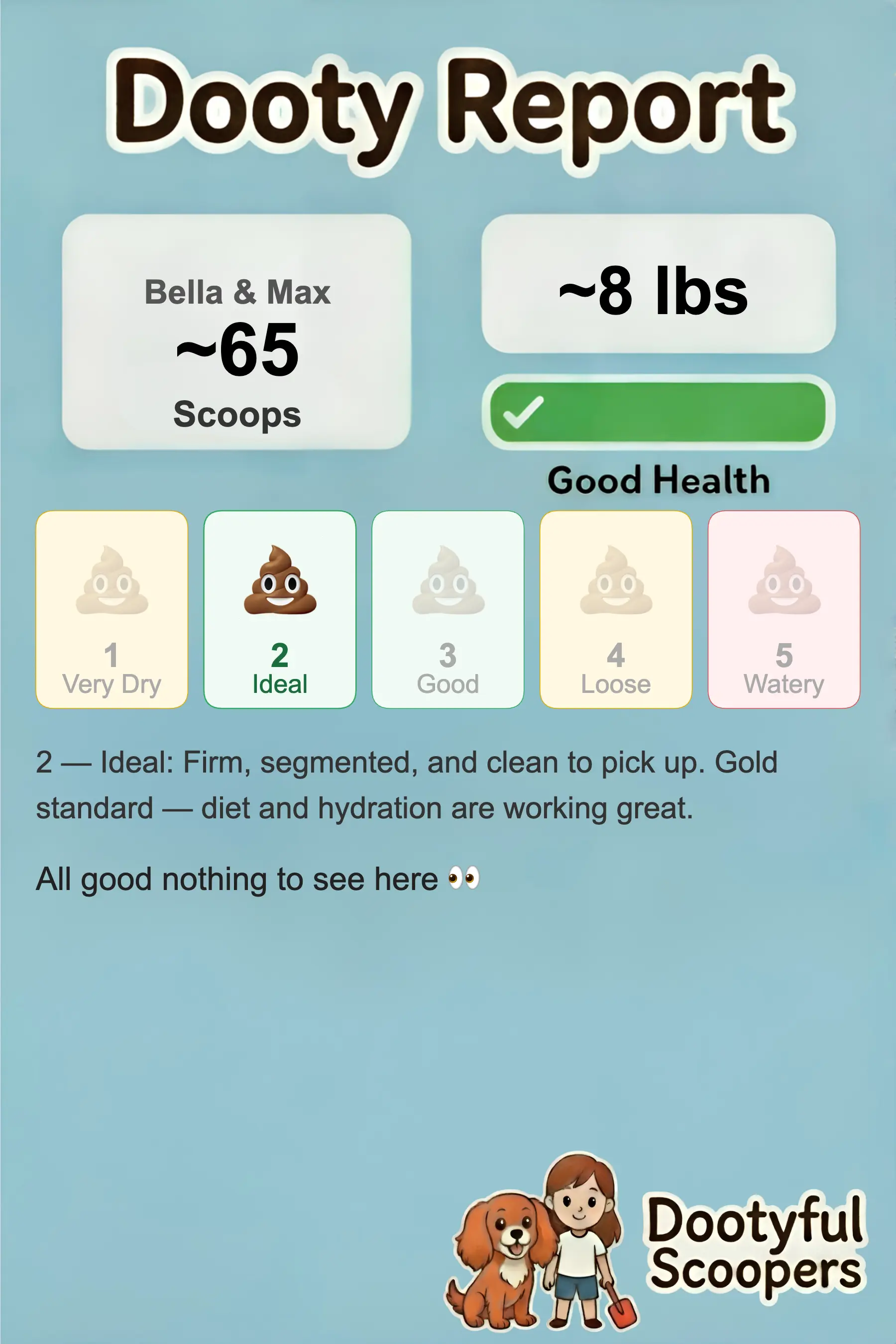
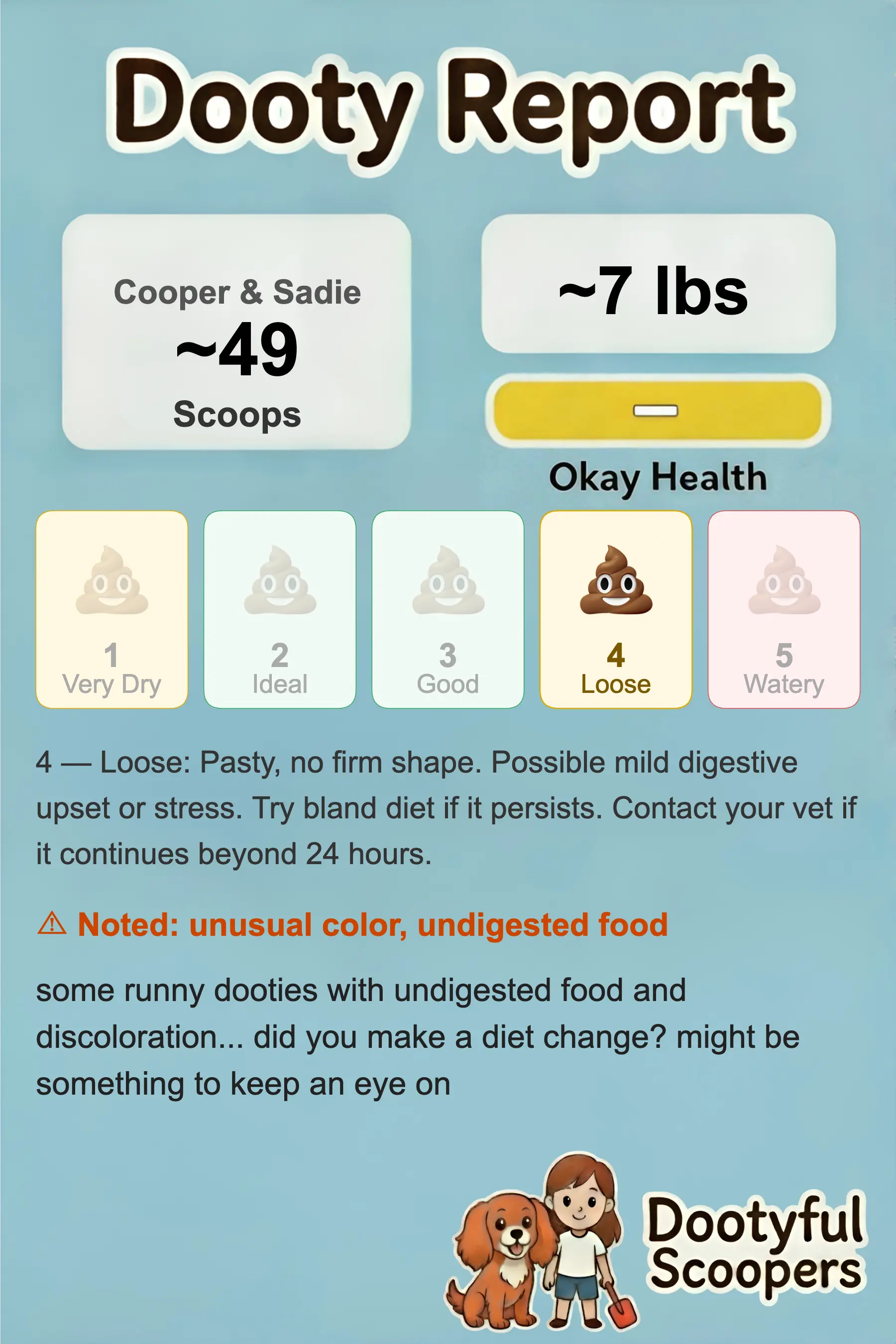
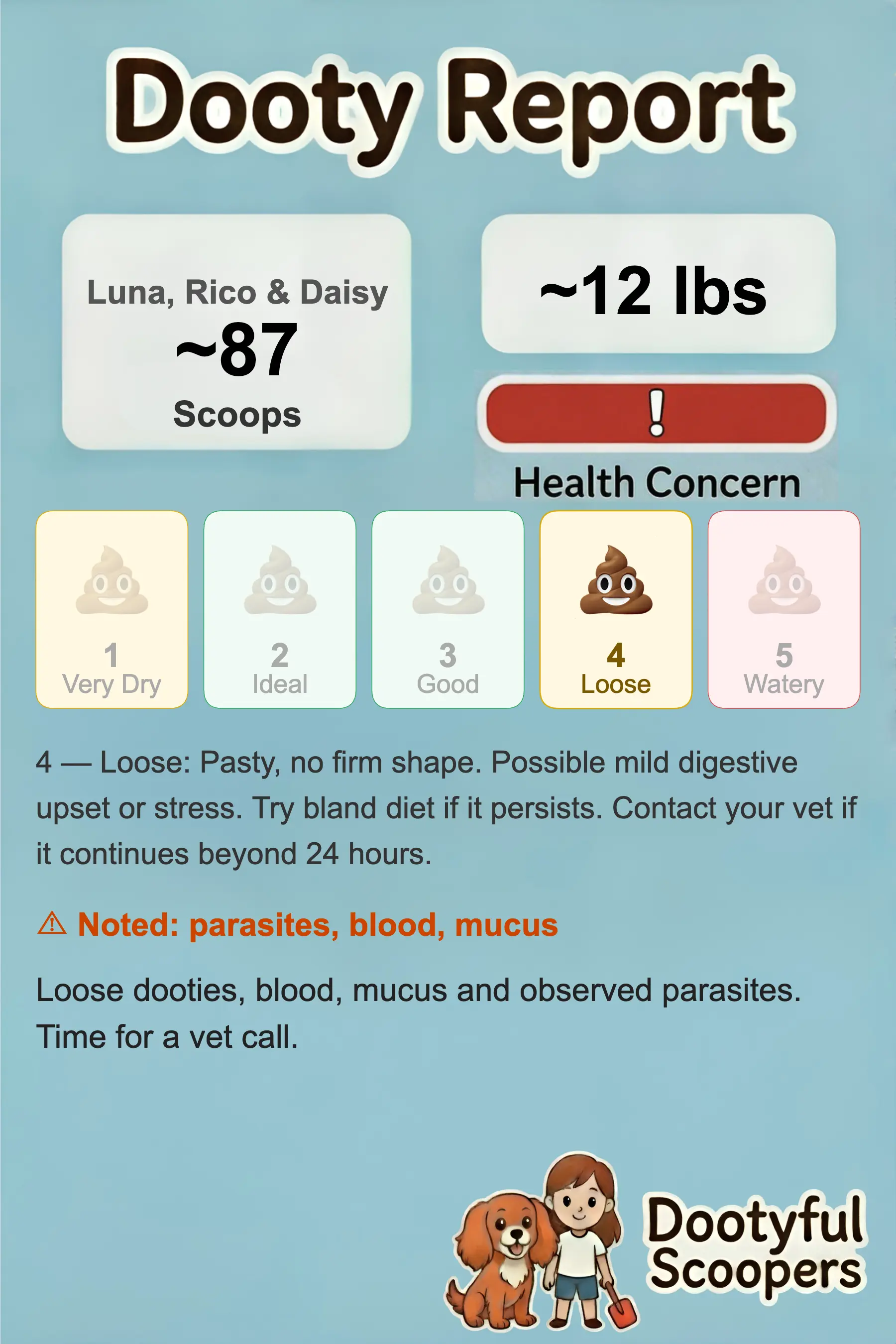
After every scoop, you'll get a short text that includes three things:
- Scoop count/weight: how many dooties we found and collected.
- Stool consistency: a quick 1–5 consistency rating — from very dry to watery — so you can track digestive health over time, plus any notable observations.
- Visit observations: anything we noticed about your yard, your dog's waste, or anything unusual compared to a typical visit.
- A health status flag: green, yellow, or red. More on that below.
Here's what each of those looks like in practice:
What the three flags actually mean
The flag isn't a diagnosis. We're not vets. But it's a clear, honest signal from someone who has been watching your dog's yard consistently and knows what "normal" looks like for your specific dog.
Normal consistency and quantity for your dog. Nothing unusual observed. Yard is clean and gate is secured. This is what you'll see the vast majority of the time.
Something was slightly off from your dog's normal: softer stool than usual, less quantity than expected, a small color change, or an unusual texture or odor. Not urgent, but worth watching over the next day or two. Consider noting it in your vet records if it continues.
Something that warrants a call to your vet: visible blood or mucus, what appears to be parasite segments, severe diarrhea or watery stool, no waste found when your dog was in the yard all day, or anything else that's clearly not right. We'll tell you exactly what we saw.
Important: We're not veterinarians, and the Dooty Report is not a medical assessment. These observations are meant to help you stay informed and catch changes early, not to replace professional care. When in doubt, call your vet. That's always the right call.
Why a poop scooping service is watching your dog's health
Fair question. Here's the honest answer: because we're in your yard every week and most people aren't.
Your dog's waste is actually one of the better early indicators of what's going on with their digestion, hydration, and overall gut health. Veterinarians ask about stool changes at almost every wellness visit for exactly this reason. But here's the problem: most pet owners only think to look closely when something's already obviously wrong, and they're often looking at stool they scooped themselves after a 30-second trip across the yard.
We spend more time paying attention to your yard than anyone else, visit after visit. We know what your dog's normal looks like. We notice when it changes.
That consistency is something your vet doesn't have, and something we can actually give you.
What we're actually looking at
When we talk about "observations," here's what we mean in practice. These aren't exhaustive; they're the kinds of things that actually show up in a Dooty Report:
Consistency
Healthy dog waste should be firm and hold its shape: something like a Play-Doh log that you can pick up cleanly. Very soft stool, pudding-like stool, or liquid waste are all signals worth noting. Occasional softness after a diet change or a stressful day is normal, but persistent changes aren't.
Color
Brown, in its various shades, is the normal range. Very dark or tarry-looking stool can indicate bleeding higher in the digestive tract. Bright red can mean something more immediate. Orange, gray, or very pale stool can indicate liver or digestive enzyme issues. We're not telling you to panic if we flag color: we're telling you it's worth a conversation with your vet.
Coating or content
A small amount of clear mucus on stool can be normal, especially during stress. A lot of it, especially combined with loose stool, is a flag. Any visible parasites: small white segments or anything that appears to be moving: is a red flag every time. We'll tell you exactly what we saw and where.
Quantity relative to what we know
If we know you have one dog who typically leaves three deposits per visit and we find none on a day when they were home all day: that's notable. If quantity suddenly doubles or drops to near zero consistently, it's worth mentioning.
Anything else that's just off
Sometimes it's not a specific thing we can point to: it's just that something looks different from what we've been seeing for the past three months. That pattern-based awareness is only possible because we show up consistently. We'll tell you when something just doesn't look right, even if we can't fully name it.
This is what "your second set of eyes" actually means
We say this in our marketing, and we mean it literally. When you hire Dootyful Scoopers, you're not just getting a cleaner yard. You're getting someone who's in that yard on a regular schedule, paying real attention, and has enough consistency with your specific dog to know the difference between "this is just how Biscuit is" and "this is new and worth flagging."
Plenty of health issues in dogs (parasites, dietary sensitivities, early GI problems) show up in waste before they show up as visible symptoms. A dog who looks totally fine on a Tuesday might have had soft, mucus-coated stool for two weeks. Their owner picked it up, wrinkled their nose, and moved on. We'd have flagged it on day three.
We're not trying to replace your vet. We're trying to be the reason you call your vet a few weeks earlier than you otherwise would have.
We also offer a free bagged vet sample on request: available to any subscriber with advance notice. If your vet has asked you to bring in a fecal sample and the timing lines up with our visit, just let us know. We'll bag and label it for you.
A note on how we document
The Dooty Report is intentionally brief. You don't need a paragraph: you need to know whether everything's fine or whether something's worth your attention. We keep it short on purpose, and we write it in plain language. No jargon. Just what we saw.
Over time, if you're a recurring subscriber, you'll build up a record of observations that can actually be useful if you ever need to describe a health pattern to your vet. That's not why we do it, but it's a side benefit of showing up every week and paying attention.
Every plan includes the Dooty Report
It's not an add-on. It's not a premium feature. Every Dootyful Scoopers plan (from once a month to twice a week) includes the Dooty Report after every single visit. Because we think every dog deserves someone paying attention, regardless of how often we come by.
If you're already a subscriber and have questions about a recent flag, just text us back directly. That number goes to a real person who knows your yard.
Every report lives in your Dooty Dashboard
A single Dooty Report tells you what we found on one visit. Your Dooty Dashboard shows you what's been happening across every visit since you signed up.
Every subscriber gets access to their own dashboard — a running log of visit dates, scoop counts, estimated waste removed, stool consistency scores, and any health flags we've noted over time. If we've flagged something unusual, it shows up there with the visit notes attached. If everything has been green across the board for months, you'll see that too.
It's the kind of at-a-glance history that's useful when your vet asks "has anything changed recently?" and you actually want an answer that's more specific than a guess. We're not vet techs and the dashboard isn't a medical record, but a pattern of yellow flags over several visits is something worth bringing up. We'd rather you have the information than not.
See how the Dooty Dashboard works →
We've got your yard and your dog.
Month-to-month plans starting at $49/mo. No contracts, no first-visit fee, Dooty Report after every scoop. Serving Bonney Lake, Buckley, and surrounding areas.
See Plans & Get Started →