Heads up: some links in this post are affiliate links. If you buy through them, we earn a small commission at no extra cost to you. We only recommend what we actually use. Questions? See our FAQ.

🛠️ DIY Dog Waste

Going It Alone? Here Are the Best Pooper Scooper Tools That Actually Work.

Our service is not for everyone, and we are okay with that. What we are not okay with is you suffering through yard cleanup with the wrong gear. Here are the hacks to Poop Scoop like a pro.

Should You Hire a Pooper Scooper Service or Do It Yourself?

We will be upfront: we are a pooper scooper company, and we think weekly professional service is the right call for most dog owners. No judgment...life just happens and we can make it more consistent than most people manage on their own 🤷‍♂️. We keep the parasite reinfection cycle broken, the lawn stays green, and it costs less per day than a cup of coffee. If you want the time back, here is how to get started.

But not everyone is in our service area. Some people genuinely enjoy the routine. Some have tight budgets. And some just want to own the job on their terms. For all of you, we are happy to share what tools work best.

We have cleaned hundreds of yards across the Bonney Lake area. We have tested and replaced more than a few pooper scoopers in our line of work. What we use in the field every single week is not what most Amazon searches surface first. The top results are dominated by flimsy, undersized, plastic-metal heavy tools that look fine in product photos but aren't ergonomic or efficient. We want to save you from learning that the hard way.

The honest math: Doing it yourself costs roughly $50 to $75 in upfront tools and $30 to $50 per year in bags. A weekly professional service runs around $25 per week. The DIY route wins on cost if you actually do it weekly. The keyword is actually. See our full cost breakdown here.

Why Most Pooper Scoopers on Amazon Are Not Worth Your Time

Search "pooper scooper" on Amazon and you will see dozens of colorful plastic clamp-style tools in the $12 to $20 range. Most of them have solid reviews from people who have a single small dog and a patio. They are a different category of tool than what you need for a real yard cleanup. Here is where they fail in practice.

📏

Too Small for the Job

Most consumer scoopers are designed around the assumption your dog is a Chihuahua. One medium-to-large dog deposit often takes two or three clamp attempts. That adds time, adds contact risk, and adds frustration.

🌿

Hopeless in Tall Grass

Clamp and jaw-style scoopers work on pavement. In actual grass, especially the longer Pacific Northwest stuff, they cannot get underneath deposits. You end up smearing rather than scooping. A rake solves this immediately.

🦴

Not Ergonomic at Full-Yard Scale

This applies to cheap metal options too, not just plastic. A lot of budget metal rake sets are cut too short, forcing the same bent-over posture. Add a rigid, skinny handle with no grip texture and your wrist and lower back are done after one pass. Handle length and grip diameter matter as much as material.

💔

Plastic Springs That Snap

The spring mechanisms on most consumer scoopers are their weakest point. They flex fine when new but weaken fast with regular use in cold weather. We have broken more of these than we can count. Metal hardware lasts.

🗑️

No Real Bag System

Many cheap scoopers have a tiny bag attachment for small rolls of scented bags that cost a fortune per bag and fill after a single deposit. For multi-dog households or a week of accumulation, you need actual capacity.

Soft Stool Problems

If your dog occasionally produces softer deposits (see our stool consistency guide), plastic jaw scoopers become nearly useless. A tray catches soft deposits where a clamp just squeezes through them.

The tell: If a scooper product photo shows it being used on a clean concrete surface or an immaculate patio, that is your signal it was designed for sidewalk use, not a real yard. Yard cleanup is a different job entirely.

What We Actually Use: The Pro Field Kit

This is not a list of things we researched. This is the exact gear our team uses in yards every week. Two tools, one disinfectant, one bag solution, and a mindset shift about why the setup matters.

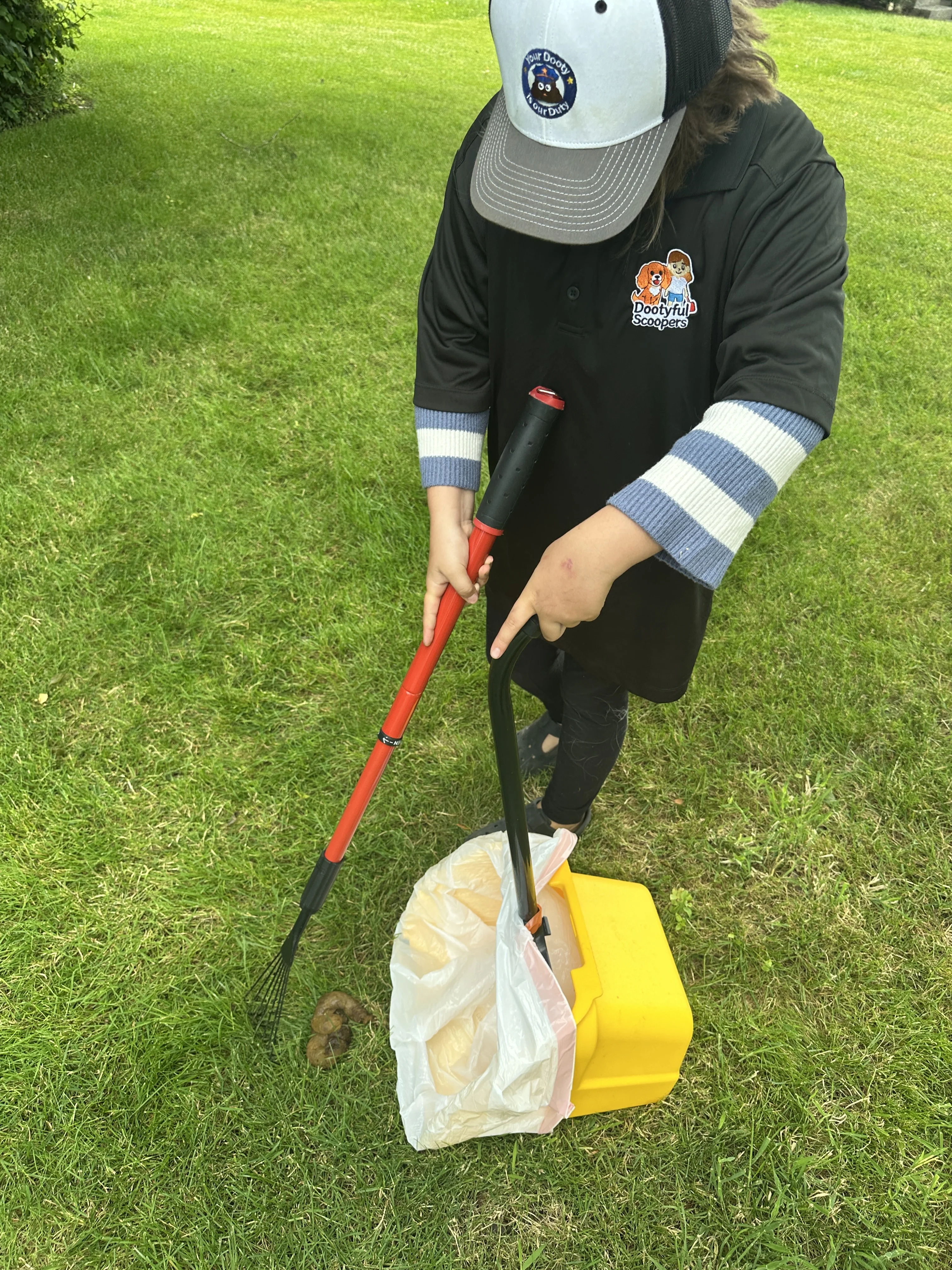
Team member using the rake in a real yard
Our #1 Pick

The Rake

  • Adjustable handle length — extends to let you work fully upright regardless of your height. This is the single biggest reason our team chose this one over everything else we tried.
  • Best pooper scooper for tall grass — the wide rake tines slide underneath deposits that grass blades are hiding. Clamps cannot do this. Rakes can.
  • Best pooper scooper for large dogs — the wide tines cover more ground per pass so you are not chasing deposits around the yard.
  • Rinses clean in seconds with a garden hose between yards
  • Holds up to daily professional use across multiple job sites

The rake and tray format is what professional services use for a reason. You are not fighting the tool. You are not making three attempts at one deposit. You rake it forward into the tray, stand up straight, walk to your bag, and tip it in. One motion. Done. For a full yard with multiple dogs or a week of accumulation, this is the only tool that makes the job feel manageable rather than miserable.

The adjustable handle is the feature we wish every rake scooper had from the start. Being able to dial in the exact length for your height means zero lower-back strain over a full cleanup session. Tall person, short person, it does not matter. Set it once and forget it. This is a big part of why we use this specific model on the job rather than the fixed-length options that look similar on Amazon.

If you have been searching for the best pooper scooper for tall grass, this is your answer. The rake tines slip underneath deposits no matter what the grass height is doing. If you have been looking for something that handles soft stool without making a mess, same answer. The tray holds everything. If you have a large breed and every other scooper has felt undersized, the wide pan fixes that too.

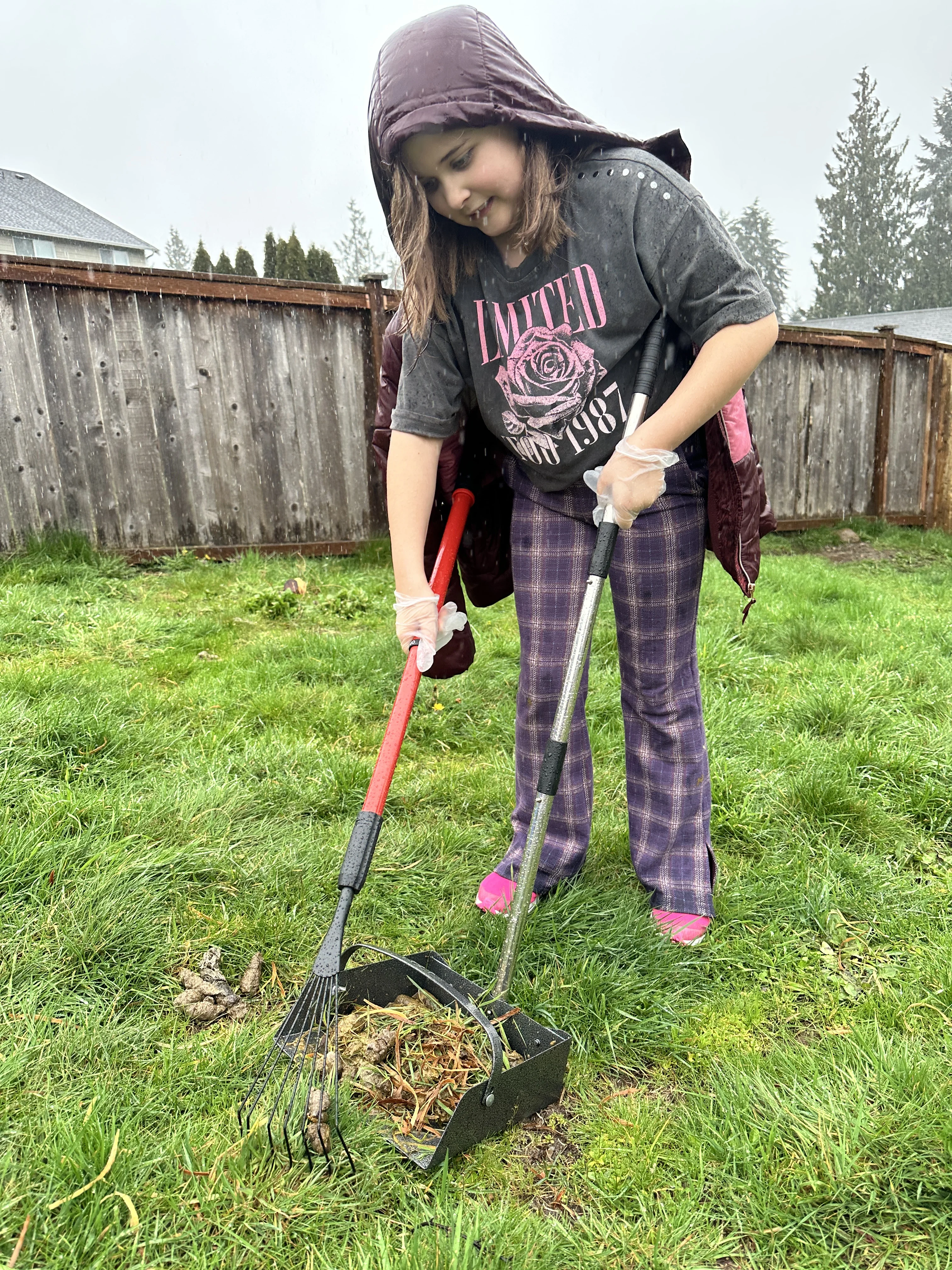
Team member holding the plastic dustbin tray after a cleanup
Great Companion Pick

The Tray

  • Best pooper scooper for soft stool — the deep plastic bin catches loose or soft deposits cleanly where jaw scoopers just push through them. If your dog has sensitive digestion, this matters.
  • Holds far more than a standard metal tray — this is a proper plastic dustbin, not a tiny awkward metal pan. You can do an entire session without emptying mid-yard.
  • Standard kitchen bags fit perfectly — line it with a 13-gallon Kirkland bag and cleanup becomes a single tip-and-tie motion. No wrestling with proprietary bag clips or small-mouth openings.
  • Ergonomic handle — the built-in grip makes it easy to carry and tip without contorting your wrist the way a flat metal tray forces you to
  • Lightweight plastic means less fatigue during a full session
  • Easy to rinse clean between yards

The rake does the collecting. The tray does the holding. These are two separate tools built for two separate jobs, and they work as a system. The rake without a good tray means you are making constant trips to the bag. The tray without the right rake means you are fighting to get deposits in.

Most people who have tried a rake-and-tray setup before gave up on the tray half because they used a small metal pan. Those standard metal trays are awkward — they sit flat with no real handle, they hold almost nothing before you have to empty them, and getting a garbage bag set up inside them without a clip or prop is its own frustration. This plastic dustbin tray is a different experience entirely. It has a real ergonomic handle, holds significantly more volume, and a standard 13-gallon kitchen bag drops right in. It is lighter in your hand, easier to tip, and easier to carry across the yard. If you have tried the metal tray before and hated it, try this instead.

Feature Typical Amazon Clamp Scooper Pro Rake and Tray Setup
Handle length 18 to 24 inches — bending required 36 to 48 inches — fully upright
Works in tall grass Poorly — jaw misses buried deposits Yes — tines get underneath
Soft stool handling Very poor — squeezes through clamp Good — tray catches all consistency types
Deposits per trip One at a time with frequent transfers Multiple deposits before emptying
Durability Plastic springs, 3 to 12 months typical Durable plastic and metal rake, built for regular use
Price $12 to $25 $25 to $50
Good for PNW conditions No — plastic degrades in cold and wet Yes — rinses clean, holds up in wet conditions
Team member holding the plastic dustbin tray after a cleanup
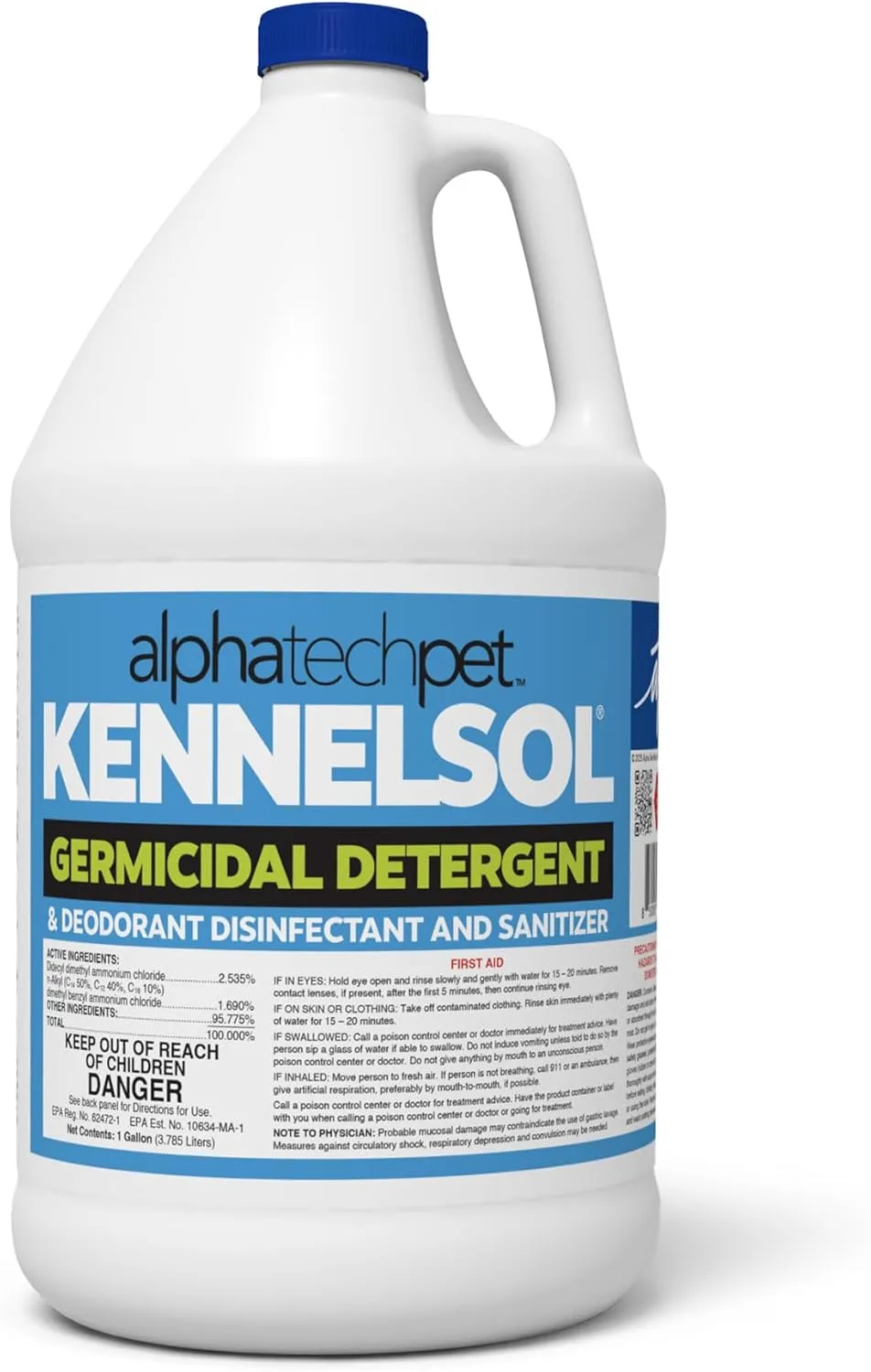
Pro Sanitation Pick

Kennel-Grade Disinfectant Concentrate

Confirm product name from your affiliate link: https://amzn.to/4vKBG7o

  • EPA-registered broad-spectrum formula kills bacteria, viruses, and fungi including parvovirus and kennel cough
  • Veterinary and kennel grade — the same class of disinfectant used in animal hospitals and boarding facilities
  • Highly concentrated so a small amount goes a long way, making it cost-effective for regular use
  • Safe on stainless steel tools when used at the recommended dilution — no corrosion risk on your rake and tray
  • No rinsing required after application on hard surfaces
  • Eliminates odor rather than masking it

This one is about more than cleanliness. It is about not carrying problems from one yard to the next. Our team disinfects tools between job sites as a standard protocol, not an occasional thing. If a yard has a dog dealing with a parasite issue or illness, we do not want to bring anything from that yard into the next one on the route. A household bleach rinse handles basic sanitizing but it is not formulated for the specific pathogens that live in dog waste. A kennel-grade concentrate is.

For DIY use, this is the tool most people never buy and probably should. If you have multiple dogs, or if your dog has been dealing with any recurring parasite issues, sanitizing your scooper after every session with something that actually kills what you are worried about is the right move. Bleach works in a pinch. This works better.

The Part Everyone Gets Wrong: The Bags

Most people think about the scooper and forget to think about the bags. This is a mistake. The tiny scented rolls sold as scooper accessories are fine for one-off on-walk pickups, but for weekly yard cleanup they are expensive per bag, too small for a full session's worth of waste, and not strong enough to avoid the disaster scenario.

🛍️

Kirkland Signature Flex-Tech Trash Bags (13-gallon, Costco)

This is what we use. A 13-gallon flex-tech kitchen bag is the right size to hold a full week of waste from one to two dogs without overfilling. They are thick enough that you are not white-knuckling the bag hoping it holds. And the cost per bag from Costco is a fraction of what you pay for branded pet waste bags from Amazon, even if you use the Amazon option linked below for convenience.

Our honest recommendation is to buy these at your local Costco. The per-bag cost at Costco is significantly lower than buying them online with shipping, and you will go through them. If you want the Amazon option for comparison or convenience, this link shows the same product family: Kirkland flex bags on Amazon — but check Costco pricing first.

Why Bag Size and Strength Actually Matter

A full weekly yard cleanup for a single medium-to-large dog produces more waste than most people estimate. An average dog produces roughly five pounds of waste per week. Over two dogs, that is ten pounds going into your bag. A cheap or undersized bag is a liability. The Kirkland 13-gallon bags have the bottom gusset and wall thickness to handle real volume without drama.

The other reason bag choice matters: dog waste carries bacteria and parasite eggs that you do not want in contact with your trash can interior, your hands, or your lawn. A bag that seals properly and does not leak is doing real work. A bargain bag that fails halfway to the trash can is a full afternoon problem.

Costco first, Amazon second. For the Kirkland bags, we always recommend checking your local Costco first. Buying in bulk there is consistently cheaper per bag than any Amazon pricing we have seen. The Amazon link is there if you need it or do not have a Costco membership.

How to Actually Do a Full Yard Cleanup the Right Way

Tools are half the battle. Technique is the other half. Here is how we approach a yard cleanup so the job takes the minimum amount of time and you actually get everything.

Walk a Grid, Not a Wander

Random meandering through a yard means you will miss deposits and double back. Start in one corner and walk parallel passes, like you are mowing. You will cover every square foot systematically and finish faster than the wandering method.

Work Downhill and With the Light

Position yourself so the sun is to your side or slightly in front. Shadows hide deposits. Side lighting makes them pop. On overcast Pacific Northwest days, try to avoid working toward bright sky glare. In tall grass, rake passes in multiple directions to surface what is buried.

Open the Bag Before You Start

This sounds trivial but it is not. Trying to shake open a bag one-handed while holding a full tray with the other is how accidents happen. Open your bag, shake it out, and prop or hold it before you start collecting. If you can hang it from a fence hook or a bucket, even better.

Clean Your Tools Like You Mean It

A hose rinse after each session keeps the tool functional. But a proper sanitize is something different. We use a kennel-grade disinfectant concentrate between every job site because we take the idea of not carrying pathogens from one yard to another seriously. For home use, a diluted bleach rinse is a reasonable minimum. If you want to go a step further the way we do, the disinfectant linked above is what we reach for. Either way, do not just rinse and rack it wet. Let the tool air dry fully between uses.

Skipping a week does not save you time. It doubles the next week's job. Skipping two weeks means you are now spending 25 minutes instead of 10, which makes it feel like a bigger chore, which makes you more likely to skip again. The consistency loop is the whole game. This is also the reason winter yard maintenance matters even when it is cold and wet outside.

Do not leave waste in a sealed bag on the lawn. This is more common than you would think. Sealed bags sitting on grass in Pacific Northwest weather create a humid microclimate underneath that kills the grass and can still leach bacteria into the soil through the bag seams over time. Bag it, tie it, trash it same day.

Your DIY Yard Cleanup Questions, Answered

What is the best pooper scooper for large dogs?
For large dogs, a long-handled metal rake and tray set is the right tool. The pan needs to be wide enough to catch a full deposit in a single pass, and the handle needs to be long enough to let you work standing upright. Jaw-style clamp scoopers are too small for large dog deposits and require multiple attempts per pile. See the rake and tray linked above for the specific setup we use professionally.
What pooper scooper works in tall grass?
Only a rake-and-tray style works reliably in tall grass. The rake tines slip underneath deposits that are partially buried or hidden by grass blades. Clamp and jaw scoopers require you to see and pinpoint the exact location of the deposit, which is nearly impossible in longer grass. If your lawn has any length to it at all, the rake format is non-negotiable.
How often should I scoop my yard?
Weekly is the minimum. An average dog produces roughly five pounds of waste per week, and going longer than a week allows that material to break down into soil, increases the risk of parasite egg survival, attracts flies, and makes the next session significantly harder. Multi-dog households benefit from two sessions per week. If you find you are consistently going two or more weeks between cleanups, the volume alone may make professional service a practical decision.
Is a pooper scooper service worth it or should I do it myself?
That depends on whether you will actually do it consistently. The DIY setup costs $50 to $75 upfront and $30 to $50 per year in bags. Weekly professional service runs around $25 per week. On pure cost, DIY wins if you are disciplined. But most people find that weekly yard cleanup in the rain, in the dark after work, in November, is not something they actually do every week. Consistency is what matters for yard health and waste health risks. If you are a reliable once-a-week person, go DIY with the right tools. If you know yourself, let us handle it.
What bags should I use for picking up dog poop in the yard?
For on-walk use, standard doggy waste bags work fine. For full yard cleanup sessions, use 13-gallon kitchen trash bags with good wall thickness. The Kirkland Signature Flex-Tech bags from Costco are what we use and recommend. They hold significant volume without tearing, seal securely, and cost a fraction of branded pet waste bags per unit. Buy them at Costco for the best per-bag price.
How do I clean a metal rake and tray scooper?
A quick rinse with a garden hose immediately after use is all it takes for day-to-day maintenance. The stainless steel pan and rake tines do not hold waste the way plastic does. Let it air dry before storing or hang it somewhere ventilated. For deeper sanitizing, a diluted bleach solution (about one tablespoon per gallon of water) is a solid baseline. But if you want to take sanitation seriously the way we do — especially if your dog has had any parasite or illness history — the better move is a kennel-grade disinfectant concentrate like the one we use. It is formulated specifically for the pathogens found in animal waste, including parvovirus, and it is safe on stainless steel tools. We disinfect between every job site for exactly this reason. For a home owner with one set of tools and one yard, doing a proper disinfectant rinse once a week takes about 60 seconds and gives you real peace of mind.

Changed Your Mind About the DIY Life?

No judgment. We have met a lot of people who bought the right tools and then realized they still just do not want to do it. Month-to-month service, no contracts, cancel anytime. We scoop so you don't have to.

See What Service Costs in Your Area